Bishop Marc Update from Lambeth: The Global Church is the Local Church

Bishop Marc Update from Lambeth: The Global Church is the Local Church

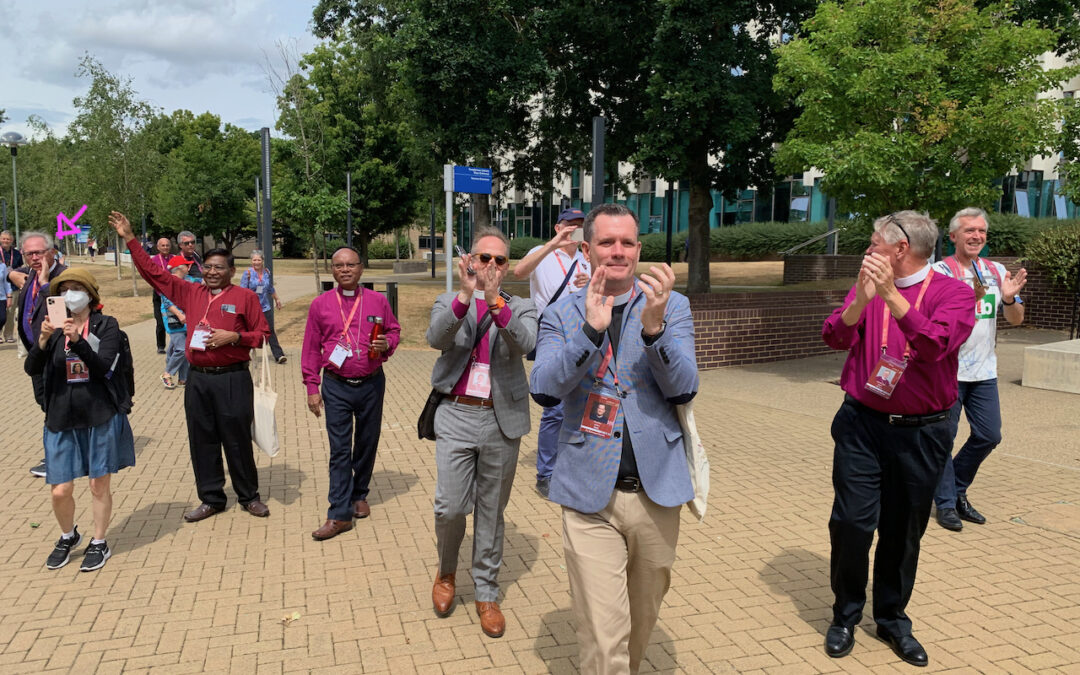
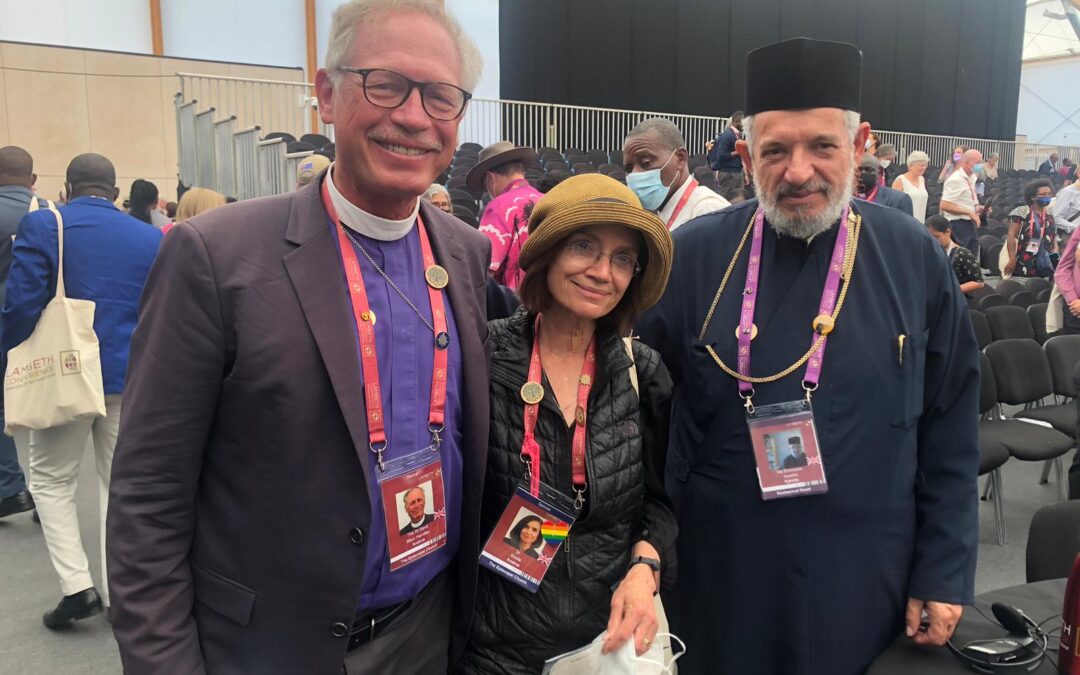
Perhaps youve seen the Episcopal News Service coverage of the LGBTQ+ solidarity march by University of Kent staff and students during the Lambeth Conference. Sheila and I were among a number of Lambeth Conference attendees to take part. Why were the Kent folks marching in the middle of the summer during a gathering of Anglican bishops from around the world? Because spouses of bishops in same-gender marriages have been barred from official participation in the conference.

The University of Kent is the physical host of the Lambeth Conference – we meet in their buildings and eat in their food-service facilities. For those University of Kent marchers, the stand of the Anglican Communion Office and the Lambeth planning office didnt match their sense of what is moral and right in human life. The Church, the body entrusted by Christ with liberating and supporting the flourishing of all life was acting to suppress and constrict life.

Its easy to see how the Lambeth Conference landing on the campus of the University of Kent brought the issue of unfairness on the part of a global body home, down to the local level. While it may not seem so obvious back in the Bay Area, it is equally of moment in the Diocese of California as it is in Canterbury (the town where the University of Kent is).

Way back in the early 2000s, during a House of Bishops meeting, a seminary professor pronounced to me that Church policy on LGBTQ inclusion was unrelated to justice. Its just about who gets to serve on vestries and other intra Church organizations, like altar guilds.At the time I was the Bishop Suffragan of Alabama. Not long before this House of Bishops meeting, gay men in Alabama had been the victims of violent hate crimes.

If, in the State of Alabama where people could and did lose their lives because of their sexual identity, it didnt matter about how the Church approached LGBTQ people, then what we were really saying is that the Church doesnt matter, that the Church is disconnected from the life.

And we can look anywhere and say the same thing – either the Church is body that helps bring the love of Jesus Christ into the world, or it is something other than the Church, and is at best irrelevant. Anywhereincludes our beloved diocese, the Episcopal Church in the Bay Area, the Diocese of California. Transgender women of color are vulnerable in the Bay Area in the same way as they are elsewhere, anywhere. The stand that your Communion, the Episcopal Church, the Diocese of California or your congregation takes matters, is noticed. We either make the world safer and better for all, or we make it worse.

So here at the Lambeth Conference 2022 the bishops of the Episcopal Church are laboring to do two things, both of which seem to me to be hallmarks of Christianity: we are seeking to enlarge the rights and protections afforded to LGBTQ people in the Church, a Communion that has some eight million members in 167 countries, while we stay in relationship with parts of the Church that differ and disagree with us. Modeled beautifully by Presiding Bishop Curry, we stay connected – we arent going anywhere– and we remain resolute on justice. We have friends within the Communion, many more than at Lambeth 2008, and we work to have no enemies. Please pray for us as we pray for you.

Sheila and +Marc Andrus

Remembering and honoring Bishop Peter Lee: a message from Bishop Marc

Early tomorrow, Sheila and I will be in the U.K. to take part in Lambeth 2022, the global gathering of Anglican bishops that takes place every decade or so at the invitation of the Archbishop of Canterbury. Since Bishop Lee’s death on July 2, he and his wife, Kristy, who survives him, have been continually in our thoughts and our prayers. I’m grateful for the many moving remembrances of Bishop Lee that have appeared in various outlets, and I want to share a few of my memories as well in this brief statement—including one of my most meaningful encounters with Bishop Lee that occurred at Lambeth 2008.
Some lead-up: I was a junior (first-year) seminarian at Virginia Seminary in 1984, the year Peter James Lee became the Bishop of Virginia. It is somewhat ironic that before my ordination my preferred seating in a church was in the gallery, certainly not up front. The old Virginia Seminary chapel had a gallery, and I was there for chapel when the new Bishop of Virginia came into the chapel in procession. There was so much gravitas, even quiet grandeur, I felt in Bishop Lee’s presence; the power of his presence was palpable to me. Little did I know that I would come to be a priest in the Diocese of Virginia and that he would be my bishop for about fifteen years.
I’d like to relate to you the charming stories of his time at Shrine Mont in the summers while I served as chaplain to the summer camps there, and at Episcopal High School, where he came to perform the first in-school Confirmations in the living memory of the school, but this remembrance is mostly about how his courage contributed to both the continuity and the transformation of our Church.
The continuity part was about maintaining a posture of balance. The Anglican Middle Way is not so much about compromise to me, but is more about the synergy of the generative space in the middle where contraries meet and become something new and more. While I was the rector of Emmanuel Church, Middleburg, the parishioners and I began a lively annual symposium program. Our little church in a very small village (600 people) was able to attract some truly marvelous speakers each year (interestingly, including Bill Countryman, whose commentary on the Gospel of John had entranced me; little did I know I would, years later, serve as the bishop of his diocese, and that Sheila and I would come to be dear friends with Bill and John).
One year we outdid ourselves—we were able to attract Elaine Pagels to come speak with us about the Gospel of Thomas and Gnosticism. We at Emmanuel were overjoyed, but not everyone in the Diocese of Virginia was equally pleased! Denunciations of our inviting a person some called a heretic into an Episcopal parish came to Bishop Lee and appeared in some publications.
To my great surprise (because I hadn’t asked him, nor did I know about the letters he had received), Bishop Lee weighed in on the matter in the Diocese of Virginia magazine. Bishop Lee wrote about the embrace of differences, the quality of inquiry without fear, the Anglican Middle Way. I was most grateful, and, in retrospect, see his letter to the diocese as a wonderful example of ministry of a bishop, taking the broad view, across the many points of view in the present, and the many opinions across time—a mountain top view of life.
The transformative part has been written about by many in the days since his death: his vote to confirm Gene Robinson as the Bishop of New Hampshire. Bishop Lee voted with the majority, so why do I hold his vote as so important? That gravitas, that quiet grandeur I opened with, these were the sensible qualities of some bishops of that time in our Church. Some of those figures stepped out of their comfortable, secure places and took risky stands for justice, stands that could, and in some cases did, cost them. Bishop Lee was such a bishop.
I will refrain from chronicling some of the vitriol that I know was aimed at Bishop Lee following his vote to confirm Bishop Robinson, for to do so would be to give the perpetrators too much attention. But the embrace of the new by such a well-respected, established bishop carried tremendous weight in the Church at large. I believe his single vote was much more impactful than its contribution to the total number needed to confirm Bishop Robinson.
Which brings us to Lambeth 2008. I was in search of an excellent person I could recommend to the Board of Trustees of Grace Cathedral to serve as their interim dean. Bishop Lee came immediately to mind; and so, Sheila and I took the Lees to lunch while we were at the Lambeth Conference to talk about this possibility.
The Lambeth conference followed shortly after Bishop Lee’s retirement from the Diocese of Virginia. Initially, he resisted my invitation to consider the position, but Sheila and Kristy joined my encouragement and he finally agreed to a new adventure.
I’m glad to say that Bishop Lee not only helped Grace Cathedral and me immeasurably, but his interim time in California began a great new chapter of ministry for the Lees: General Seminary, Paris, and East Carolina all followed his tenure at Grace. The Diocese of California was blessed by Bishop Lee’s quiet competence, his calm, and his profound faith that could both embrace the middle way and courageous paths. He is sorely missed by many in our Diocese, and by me and my family. We have all been blessed to have this wonderful bishop and friend in our lives.
In faith,
+Marc

The “Lambeth Calls” document: a statement from Bishop Marc

I join with many Episcopal Church bishops, the bishops of the Scottish Episcopal Church, and, in the days to come, I’m sure with many other bishops of the Communion in expressing my dismay at the “Lambeth Calls” document that was abruptly distributed to Anglican bishops on the eve of the Lambeth Conference. Both the timing and the content of the document are problematic in that they offer little opportunity for those of us who disagree to voice our dissent.
What is objectionable about the Lambeth Calls document? Let me focus on two areas of concern: 1) the apparent attempt to fast-track a Communion-wide stance that accords with the Archbishop of Canterbury’s own stand on human sexuality and 2) the nature of his position, which is to oppose same-gender marriage (see page 31 of the “Lambeth Calls” document, in the section on Human Dignity).
The Episcopal Church will not go backward on our affirmation of the full rights of the LGBTQ community, and certainly this diocese, which has long been a leader in this area, will be resolute. The Diocese of California can count on Sheila and me to do our best during the Lambeth Conference to advocate and witness for LGBTQ rights. We will have many allies in this effort; I ask for your prayers.
An Announcement to the Episcopal Diocese of California, from Bishop Marc

An Announcement to the Episcopal Diocese of California, from Bishop Marc

Traducion al español a continuacionWe have come this far by faith,
Leaning on the Lord, 
Trusting in His holy Word, 
He’s never failed us –yet. 
Singin’ oh, oh, oh, can’t turn a-round, 
We’ve come this far by faith.Greetings to my siblings in the Episcopal Diocese of California on a day when we remember the Feast of Mary Magdalene, and the anniversary of my installation as your bishop in 2006, to announce plans for my retirement as your bishop.  I share this news with a full heart, full of appreciation for the time that Sheila, our children, and I have lived with you in this extraordinary place of possibilities.  Upon my election, I offered a statement which was also a prayer and a hope of what we might do together; an excerpt of that statement follows:

“…your vote today remains a vote for inclusion and communion – of gay and lesbian people in their full lives as single or partnered people, of women, of all. Ethnic minorities, and all people.  My commitment to Jesus Christ’s own mission of inclusion is resolute.

And I share with you your strongly expressed commitment to youth, to those who do not yet know Christ, our calling as evangelists, and to God’s waiting, expectant creation.

I take this election to be an expression of our common desire to be part of the whole, the Communion, and the world, in what may be a new way.  We will work together in the listening process, lending the unique voice of the Bay Area Episcopalians to this great conversation and working to end global human suffering.

Finally, let me say, that being nourished as a bishop by the Episcopal Diocese of Alabama, fed by the historic and living witness of so many heroes of the struggle for human rights, whose words and deeds of compassion and justice have inspired and sustained me, I say to you the sentiment of a west coast hero, …in the cause of peace, we cannot be sprinters, we must be long distance runners. (Cesar Chavez)

With humility, and by God’s grace, I believe we have worked on all these hopes together, and there is much to celebrate.  In the early years of my episcopate, we launched a strategic planning process that has been foundational for building the beloved community – we revised our diocesan governance to bring more transparency between leadership bodies, and we actively sought and developed resources to support diversity, engagement with our communities, and invitation to our congregations.  We immediately began a transition in communications from paper to digital and benefit today from a vibrant weekly e-newsletter and social media communications led by superlative diocesan staff.

Our work together produced material and programmatic accomplishments that continue to impact the Bay Area and the Anglican Communion –

-a $2.3 billion dollar effort that rebuilt St. Luke’s Hospital and a new, quaternary-care hospital on Van Ness Ave, as a result our engagement in a city-wide planning process;
-a successful capital campaign that brings $14 million dollars in new resources to the diocese; the development of Episcopal Charities to the Episcopal Impact Fund,with a million dollars in new funds for Bay Area-wide programs;
-leadership on behalf of the Episcopal Church for work to address the climate crisis, including official observer status at the UN talks on climate change;
-the support of education in the Episcopal Diocese of Haiti, resulting in the planting of 160,000 trees and music education for vulnerable Haitian youth;
-co-hosting a climate conference with our companion diocese in Brazil that brought new teachings to the full House of Bishops;
-creative work in liturgy, such as Eco-confirmation;
-the development of our School for Deacons to an online program that will bring educational opportunities for the diaconate across the U.S.;
-essential ministry and advocacy for marriage equality in the Episcopal Church and in the United States;
-participating in advocacy and diocesan institutions and congregations that support Latino/Latina, Black and Asian heritage and rights; and,
-the launch of St Anna-Jubilee Farm vision, among many other important justice needs.

More recently, we have been finding new ways to be a compassionate and vibrant church in the Bay Area during the Covid pandemic using new technologies and resources that can sustain ministry.  I am grateful that, through the generous giving of several Episcopalians, we were able to offer financial relief to 40+ congregations during the first two years of the pandemic, and a lifeline during the same time to our St Dorothy’s and Bishop’s Ranch camp and conference centers.  We also benefited during this extraordinary time from a diocesan crisis response team with members from our diocesan staff, our Chancellor, and key clergy and lay persons, who joined me in advising and providing resources across a range of needs, from interpreting state, local and federal COVID guidelines, to applying for PPP (Paycheck Protection Program) loans to technology for hybrid services and resources for liturgy and Christian formation.

We have also faced challenges, disappointments, and heartaches—loss of dear friends who gave unstintingly to ministries of our diocese, closure of some our congregations, and challenges particular to the Bay Area and to our world in the 21st century ranging from wildfires and income inequality to atomization of community.   The spiritual I quoted at the beginning of this letter goes on:

Don’t be discouraged 
When troubles come your -way. 
He’ll bear all your burdens, 
And turn all your night into day.

All these successes and disappointments, we have faced together in a pattern of common life blessed by visitations, confirmations, ordinations, and work with diocesan institutions and local and regional partners.  I want to especially acknowledge the faithful, dedicated, and excellent work of diocesan staff, past and present.  These wonderful people prayerfully and faithfully serve you each day.  And, my siblings, there is more ministry before us!

Your excellent Standing Committee, led by the Rev. Dr. Deborah White, President, will lead, independent of me and diocesan staff, a search process for the 9th Bishop of the Episcopal Diocese of California.  In brief, they will call a search committee with a goal of electing your next bishop on Dec. 9, 2023. The consent process for the bishop-elect will take several months, and the date set for consecration is May 4, 2024.  There will be a brief transition of about three months when your next bishop will serve as coadjutor, and Sheila and I will leave for our new home and life in Virginia by the end of July 2024.

This schedule, which follows the normal timeline and orderly process for a bishop’s election and transition in the Episcopal Church, affords time for me to not only continue in ministry as your bishop a while longer, but also to work with you on a number of important goals, for example, the full implementation of our DioCal Vital and Thriving Initiative, that will bring funding for new ministry and will empower congregations to carry this ministry out; the call of a Canon for Racial, Environmental and Social Justice; continuing my efforts to support fragile DioCal congregations; and, working with partners within and outside the Episcopal Church to address the climate crisis, including leading the Episcopal Church delegations to the U.N. Conference on Climate Change on behalf of our Presiding Bishop.

With these and other goals, you can see there is still much to do together, but I also look forward to your next chapter, when you will surely be blessed by a new bishop.  Of this I am certain—the Episcopal Diocese of California is, and will continue to be, a place of possibility.  It is a place of God’s grace and beauty, and it has been the deep honor of my life to share in ministry with you.

We’ve come this far by faith, 
Leaning on the Lord…

Returning to the spiritual that has patterned this letter, I can see the sweep of Jesus’ ministry, that provides the shape of our own shared ministry, how the one on whom we lean was himself always accompanied by and relying upon the Spirit. The Spirit who alighted upon him at his Baptism. The Spirit who immediately drove or drew him into the wilderness for his testing. The Spirit who then poured forth from him as he went about the Galilee, proclaiming the nearness of the Beloved Community. I believe that together we have sought to conform our life to that pattern—always relying on the always-present Holy Spirit, always witnessing to the Beloved Community. I feel confidence that you will continue on this sacred path of the Spirit, that you will go forward in faith, leaning on God.

In closing, please know that when it comes time for Sheila and me to leave, that we will take with us the sound of the foghorn, the sunsets at the Bishop’s Ranch, the mystery of forests at St. Dorothy’s and the vistas of Tomales Bay at St Columba’s, Inverness, the warmth and love of congregations across the Bay Area, the sweet sound of children’s choirs, of campers and of young adults at campus ministry events, the sacred space of Grace Cathedral, and ties of the heart in friendship to all of you.  You, the Diocese of California, will always be part of us—beloved community that has been our blessing.

I am grateful for the call you gave to me to serve as your bishop, and I will always have the great Diocese of California, and its people, in my heart and prayers.

Anuncio a la Diócesis Episcopal de California

Hemos llegado hasta aquí por fe, 
apoyándonos en el Señor, 
confiando en su santa palabra, 
hasta ahora, nunca nos ha fallado. 
Cantando, oh, oh, oh, no puedo regresar, 
Hemos llegado hasta aquí por la fe.

Saludos a mis hermanos de la Diócesis Episcopal de California en un día en que recordamos la celebración de María Magdalena, y el aniversario de mi nombramiento como su obispo en 2006, para anunciarles los planes de mi retiro como su obispo.  Comparto esta noticia con el corazón pleno, lleno de agradecimiento por el tiempo que Sheila, nuestros hijos y yo hemos vivido con ustedes en este extraordinario lugar de posibilidades.  Tras mi elección, ofrecí una declaración que era también una oración y una esperanza de lo que podríamos hacer juntos; a continuación, un extracto de esa declaración:

“…su voto hoy sigue siendo un voto por la inclusión y la comunión: de personas gays y lesbianas en su plenitud de vida, tanto solteros/as como en pareja, de mujeres, de todos. Minorías étnicas, y todas las personas.  Mi compromiso con la propia misión de inclusión de Jesucristo es firme.

Y comparto con ustedes su compromiso, fuertemente expresado, con los jóvenes, con los que aún no conocen a Cristo, con nuestra vocación de evangelizadores y por la creación expectante de Dios.

Considero que esta elección es una expresión de nuestro deseo común de formar parte del conjunto, de la comunión, y del mundo, en lo que puede ser una nueva manera.  Trabajaremos juntos en el proceso de escucha, prestando la voz única de los episcopales del Área de la Bahía a esta gran conversación y trabajando para acabar con el sufrimiento humano global.

Por último, permítanme decir que, al nutrirme como obispo de la Diócesis Episcopal de Alabama, al nutrirme del testimonio histórico y vivo de tantos héroes de la lucha por los derechos humanos, cuyas palabras y hechos de compasión y justicia me han inspirado y sostenido, les expreso el sentimiento de un héroe de la costa oeste, …en la causa de la paz, no podemos ser velocistas, debemos ser corredores de largas distancias”. (Cesar Chavez)

Con humildad, y por la gracia de Dios, creo que hemos trabajado juntos en todas estas expectativas, por lo que hay mucho que celebrar.  En los primeros años de mi episcopado, pusimos en marcha un proceso de planificación estratégica que ha sido fundamental para la construcción de nuestra querida comunidad: revisamos nuestra gobernanza diocesana para lograr una mayor transparencia entre los órganos de dirección, y buscamos y desarrollamos activamente recursos para apoyar la diversidad, el compromiso con nuestras comunidades y la invitación a nuestras congregaciones.  Inmediatamente, iniciamos la transición de las comunicaciones en papel a las digitales y hoy nos beneficiamos de un dinámico boletín electrónico semanal y de comunicaciones en redes sociales dirigidas por un personal diocesano excepcional.

Nuestro trabajo conjunto produjo logros materiales y programáticos que siguen teniendo impacto en el Área de la Bahía y en la Comunión Anglicana –

  • un esfuerzo de $2.300 millones, que reconstruyó el Hospital de St. Luke y un nuevo hospital de cuidados cuaternarios en Av. Van Ness, como resultado de nuestra participación en un proceso de planificación en toda la ciudad;
  • una exitosa campaña de recaudación que aporta $14 millones en nuevos recursos a la diócesis; el desarrollo de Episcopal Charities al Fondo de Impacto Episcopal, con un millón de dólares en nuevos fondos para los programas del Área de la Bahía;
  • el liderazgo en nombre de la Iglesia Episcopal para trabajar en la lucha contra la crisis climática, incluido el estatus de observador oficial en las conversaciones sobre el cambio climático de las Naciones Unidas;
  • el apoyo a la educación en la Diócesis Episcopal de Haití, que se traduce en la plantación de 160.000 árboles y la educación musical de jóvenes haitianos vulnerables;
  • co-anfitrión de una conferencia climática con nuestra diócesis hermana en Brasil que aportó nuevas enseñanzas en el plenario de Obispos;
  • trabajo creativo en la liturgia, como la Eco-confirmación;
  • el desarrollo de nuestra escuela para diáconos hacia un programa en línea que llevará las oportunidades educativas para el diaconado a través de los Estados Unidos;
  • ministerio fundamental y la defensa de la igualdad conyugal en la Iglesia Episcopal y en los Estados Unidos;
  • participación en instituciones y congregaciones diocesanas que apoyan el patrimonio y los derechos de los latinos/latinas, la población negra y asiáticos; y
  • el lanzamiento de la visión de St Anna-Jubilee Farm, entre otras muchas necesidades importantes en materia de justicia.

Más recientemente, hemos encontrado nuevas formas de ser una iglesia compasiva y vibrante en el Área de la Bahía durante la pandemia de COVID, utilizando nuevas tecnologías y recursos que puedan sostener al ministerio.  Estoy agradecido de que, gracias a las generosas donaciones de varios episcopales, hayamos podido ofrecer ayuda financiera a más de 40 congregaciones durante los dos primeros años de la pandemia, y un sustento durante el mismo tiempo a nuestros campamentos y centros de conferencias de St Dorothy y Bishop’s Ranch.  También nos beneficiamos durante este tiempo extraordinario de un equipo diocesano de respuesta ante crisis con miembros de nuestro personal diocesano, nuestro Canciller y personas clave del clero y del laicado, que se unieron a mí para asesorar y proporcionar recursos a través de una serie de necesidades, desde la interpretación de las normas estatales, locales y federales relativas al COVID, hasta las solicitudes para el Programa de Protección del Salario (PPP, por sus siglas en inglés), así como los préstamos destinados a la tecnología para servicios híbridos y recursos para la liturgia y la formación cristiana.

También nos hemos enfrentado a desafíos, decepciones y tristezas: la pérdida de queridos amigos que se entregaron sin reservas a los ministerios de nuestra diócesis, el cierre de algunas de nuestras congregaciones y los desafíos propios del Área de la Bahía y de nuestro mundo en el siglo XXI, que van desde los incendios forestales y la desigualdad de ingresos hasta la atomización de la comunidad.   El espiritual que cité al principio de esta carta continúa:

No te desanimes
 cuando los problemas se presenten en tu camino. 
Él llevará todas tus cargas, 
y convertirá toda tu noche en día.

Todos estos éxitos y decepciones los hemos afrontado juntos en un modelo de vida común, bendecido por las visitas, confirmaciones, ordenaciones y el trabajo con las instituciones diocesanas y los colaboradores locales y regionales.  Quiero reconocer especialmente el trabajo fiel, dedicado y excelente del personal diocesano, pasado y presente.  Estas maravillosas personas sirven fielmente y en oración cada día.  Y, hermanos míos, ¡hay más ministerio ante nosotros!

Su destacado Comité Permanente, dirigido por la Rev. Dra. Deborah White, Presidenta, dirigirá, independientemente de mí y del personal diocesano, un proceso de búsqueda del 9º Obispo de la Diócesis Episcopal de California.  En resumen, convocarán un comité de búsqueda con el objetivo de elegir a su próximo obispo el 9 de diciembre de 2023 El proceso de consentimiento del obispo electo durará varios meses, y la fecha prevista para la consagración es el 4 de mayo de 2024.  Habrá una breve transición de unos tres meses en la que su próximo obispo ejercerá de coadjutor, y Sheila y yo partiremos hacia nuestro nuevo hogar y vida en Virginia a finales de julio de 2024.

Este cronograma, que sigue el cronograma normal y el proceso ordenado para la elección y transición de un obispo en la Iglesia Episcopal, me da tiempo no solo para continuar en el ministerio como su obispo por un tiempo más, sino también para trabajar con ustedes en una serie de objetivos importantes, por ejemplo, la plena implementación de nuestra Iniciativa Vital y Próspera (Vital and Thriving Initiative) de DioCal, que traerá fondos para el nuevo ministerio y empoderará a las congregaciones para llevar a cabo dicho ministerio; el llamamiento de un canónigo para la justicia racial, medioambiental y social; la continuación de mis esfuerzos para apoyar a las congregaciones frágiles de DioCal; y, el trabajo con socios dentro y fuera de la Iglesia Episcopal para abordar la crisis climática, incluyendo la dirección de las delegaciones de la Iglesia Episcopal en la ONU. Conferencia sobre el Cambio Climático en nombre de nuestro Obispo Presidente.

Con estos y otros objetivos, pueden ver que todavía hay mucho que hacer juntos, pero también espero con ansias su próximo capítulo, cuando seguramente serán bendecidos por un nuevo obispo.  De esto estoy seguro: la Diócesis Episcopal de California es, y seguirá siendo, un lugar de posibilidades.  Es un lugar de gracia y belleza en Dios, y ha sido el profundo honor de mi vida compartir el ministerio con ustedes.

Hemos llegado hasta aquí por la fe, 
Apoyándonos en el Señor…

Volviendo a lo espiritual que ha modelado esta carta, puedo ver el alcance del ministerio de Jesús, que proporciona la forma de nuestro propio ministerio compartido, cómo aquel en quien nos apoyamos estuvo siempre acompañado por el Espíritu y contando con él. El Espíritu que se posó sobre Él en su bautismo. El Espíritu que inmediatamente lo condujo o llevó al desierto para ser probado. El Espíritu que entonces brotó de Él, mientras recorría Galilea, anunciando su acercamiento a la amada comunidad. Creo que juntos hemos procurado conformar nuestra vida según ese modelo, confiando siempre en el Espíritu Santo, siempre presente, dando testimonio a la querida comunidad. Siento confianza en que continuarán en este camino sagrado del Espíritu, que avanzarán con fe, sosteniéndose en Dios.

Para terminar, sepan que cuando llegue el momento de que Sheila y yo nos vayamos, nos llevaremos con nosotros el sonido de la sirena de niebla, las puestas de sol en el Bishop’s Ranch, el misterio de los bosques en St. Dorothy y las vistas de la Bahía de Tomales en St Columba, Inverness, la calidez y el amor de las congregaciones de toda la zona de la bahía, el dulce sonido de los coros de niños, de los campistas y de los jóvenes adultos en los eventos del ministerio del campus, el espacio sagrado de Grace Cathedral, y los lazos del corazón de la amistad de todos ustedes.  Ustedes, la Diócesis de California, siempre serán parte de nosotros, amada comunidad que han sido nuestra bendición.

Estoy agradecido por el llamado que me dieron para servir como su obispo, y siempre tendré a la gran Diócesis de California, y a su gente, en mi corazón y en mis oraciones.

Joint statement on the overturning of Roe v. Wade, from the Bishop’s Office and Grace Cathedral

We received news this morning that the Supreme Court has struck down Roe v Wade. It must be underscored that this decision further endangers the lives of vulnerable women living in poverty, people who are often Black and brown. The road to restore justice in the wake of this traumatic decision will be a long one, and it will require tremendous conviction, compassion, kindness to one another, and self-care.

Our Presiding Bishop, the Most Reverend Michael Bruce Curry, has issued a lengthier statement than this, which both explains and grounds the Episcopal Church stance on reproductive rights in the legislation of our Church. Such Church legislation shows a long-standing commitment to the protection of life – the life of women, the unborn and of children.

Presiding Bishop Curry speaks to the reality of the impact of this decision, saying, “While I, like many, anticipated this decision, I am deeply grieved by it. I have been ordained more than 40 years, and I have served as a pastor in poor communities; I have witnessed firsthand the negative impact this decision will have.” Please see his full statement here.

This decision, coming as it does on the heels of a decision that fuels, rather than tamps down the wildfire of gun violence in the United States, is beyond disturbing. Our Supreme Court should, in the broadest sense, work to make Americans – all Americans – safer and more secure, more able to enjoy “life, liberty and the pursuit of happiness,” not to make life more dangerous and difficult.

It should not be the case that the state where one lives, one’s race or economic status determines how full and free one’s life is. The Supreme Court’s decision on Dobbs vs Jackson Women’s Health Organization opens the door to a patchwork landscape across our country, marked by varying degrees of inequality.

We call on faithful Episcopalians in the Diocese of California and indeed all Americans to prayerfully pursue nonviolent and unrelenting efforts to work for justice.

Jesus of Nazareth, the founder and center of our faith, both honored the laws of Moses, and sought to purify the understanding and practice of them. Again and again, he helped people understand that laws didn’t exist for themselves, nor for the purposes of oppressing people, but to liberate all people, all of life. As an early follower of Jesus, Paul, wrote, “For the Son of God, Jesus Christ, was not ‘Yes and No’; but in him it has always been ‘Yes’.’” For in him every one of God’s promises is a ‘Yes.’” I take this to mean, as Bishop Curry often says, that God is “… life-giving, liberating, and loving.”

In faith,

The Rt. Rev. Marc Handley Andrus, PhD | Bishop of California
The Rev. Cn. Debra Low-Skinner | Canon to the Ordinary, Diocese of California
The Very Rev. Malcolm Clemens Young, ThD | Dean of Grace Cathedral
The Rev. Greg Kimura, PhD | Vice Dean of Grace Cathedral


Bishop Marc Statement on the St. Stephen’s, Vestavia Hills Shooting

In the unrelenting onslaught of mass shootings that continue to wrack our country, the shooting at St. Stephen’s Episcopal Church in Vestavia Hills, Alabama has wrung Sheila’s and my hearts in a personal way.
I was ordained as a bishop in Alabama, and St. Stephen’s is a parish we both know and love. The former rector, the Rev. Doug Carpenter, is someone I have respected and cared for many years. I met the current rector when he was a student in an environmental theology class. I taught at Virginia Seminary.
Sheila and I send our love and the assurance of our prayers to the people of St. Stephen’s. “Prayers” mean, for me, a commitment to supporting gun reform; we must change so that the tragic, unnecessary deaths are stopped.