Jul 1, 2026 | #Stories
Story and photos submitted by Nicole Walters
This June, the Beloved Community of St. Columba’s Inverness gathered to celebrate the Feast of St. Columba while also marking two significant milestones in its history: the 95th anniversary of becoming a mission congregation in 1931 and the 75th anniversary of the first worship service in its current home on June 3, 1951. While these anniversaries offered cause for celebration, they also invited reflection on a story that began even earlier, with the purchase of property on Cameron Street in 1903 and the emergence of a small worshiping community that would eventually become St. Columba’s.
Following worship, community members shared a picnic meal, explored a historical timeline, viewed photographs from the archives, and learned stories preserved through decades of parish records and oral history. The celebration offered an opportunity not only to remember the past but also to reflect on the continuing life of a community whose roots run deep into the landscape of West Marin.
The occasion was particularly fitting given the church’s namesake. St. Columba, or Colum Cille, was born in Donegal around the year 521 and is remembered as one of Ireland’s three patron saints. Founder of monastic communities in Derry and on the island of Iona, Columba helped establish centers of prayer, hospitality, learning, and mission that shaped Celtic Christianity for generations. In 2021, Christians around the world commemorated the 1500th anniversary of his birth.
Among the enduring gifts of the Celtic tradition is its understanding that God is encountered not only in sacred spaces but through the particular places where people live, pray, and belong. Land, memory, and community become intertwined. The stories of those who came before are not simply historical records; they become part of a living spiritual inheritance.
That vision resonates deeply at St. Columba’s.
Many of the historical materials featured in the celebration were gathered by historian, librarian, and archivist Meg Linden, along with a small team of volunteers who continue to organize, preserve, and explore the church’s archives. Their ongoing work has helped bring to light stories, photographs, records, and memories that connect today’s community with generations past. Their work reveals a story not merely of buildings and dates, but of people whose faith found expression through craftsmanship, generosity, hospitality, and care for place.
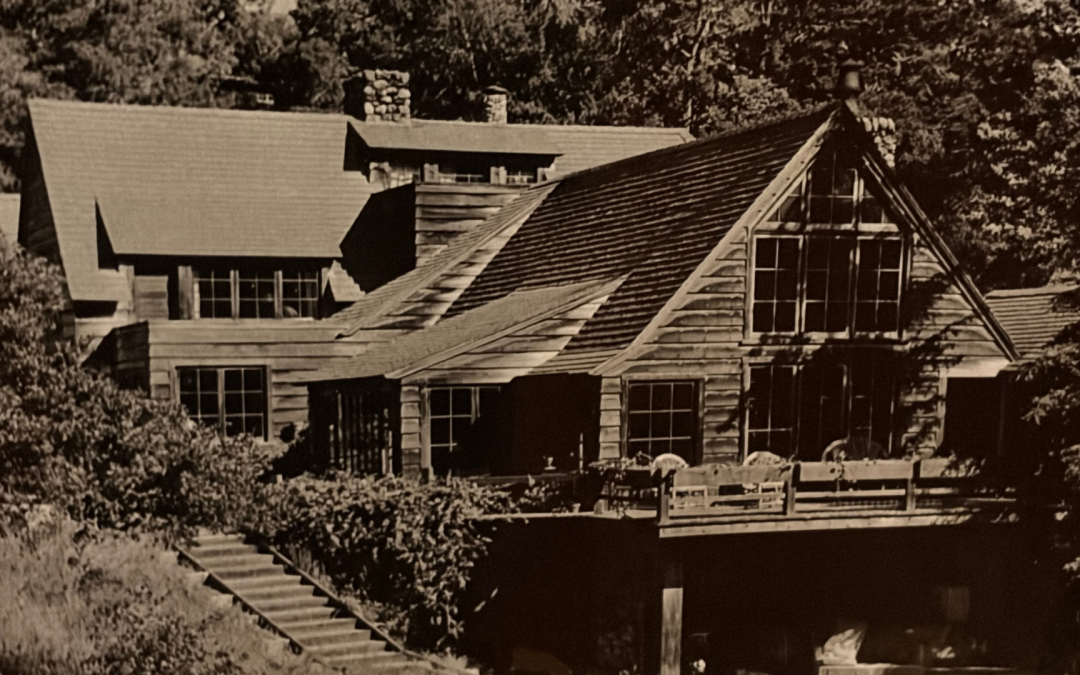
Long before it became a church, the property was the summer home of the Frick family. The house itself, completed in 1930 and built of old-growth redwood, originally sat on eight acres overlooking Tomales Bay. Family accounts suggest that the home’s owner envisioned it as a place where his daughters could be married, and indeed, the first wedding took place there in March 1930. Eventually, all three daughters were married in the house.
When the congregation outgrew its original church building on nearby Cameron Street, leaders began exploring possibilities for the future. The earlier church had faithfully served the community for decades. Summer services were sometimes held outdoors beneath the trees, and the modest building became increasingly crowded as the congregation grew.
After extensive negotiations, the church purchased the Frick family home and transformed it into a new center for worship. The first service in the building was held on June 3, 1951. For a period of time, the building functioned both as a church and as a residence for clergy and their families. Over the years, porches were enclosed, rooms adapted, and the home gradually evolved into the sacred space known today.
Yet perhaps the most remarkable aspect of St. Columba’s history is the extent to which the campus was shaped by the hands and imagination of its own members.
The iconic Celtic cross overlooking the property began as an idea approved in the early 1950s but delayed by lack of funding. A model was created, a donor from the Crocker family provided support, and the cross was poured on site in 1957. A local craftsman, Joe Gomes, later built its base and created the stone baptismal font as a memorial to his first wife.
Throughout the campus, similar stories emerge. Members designed and built structures, donated materials, created artwork, and offered countless volunteer hours. Church members built the casitas which line the meditation path. Local historian and longtime church leader Jack Mason helped design the amphitheater, completed in 1966 to house the Inverness Music Festival. The bell tower, pathways, chapel furnishings, and memorial gifts throughout the grounds all bear witness to generations who invested their gifts in this sacred place.
Today, that same spirit continues.
The old-growth redwood home has become far more than a former summer home. It now serves as a church, retreat house, library, and contemplative center overlooking Tomales Bay. While the buildings and grounds tell stories of earlier generations, they also bear witness to a remarkable chapter of renewal unfolding in the present.
When Fr. Vincent Pizzuto began his ministry at St. Columba’s in 2017, he brought a vision rooted in contemplative Christianity, hospitality, theological depth, and spiritual formation. Drawing upon his pastoral ministry and academic work in Christian mysticism and New Testament studies, he invited the community to imagine St. Columba’s not only as a local church, but also as a place where people could encounter God through prayer, study, beauty, silence, and community.
The vision resonated with those who arrived seeking a deeper spiritual life, and together they began shaping a renewed expression of community. Congregants, retreatants, volunteers, staff, clergy, and friends of St. Columba’s invested their gifts, time, creativity, and labor into bringing that vision to life. Retreat ministries expanded, the library grew, contemplative practice became woven into the rhythm of community life, and hospitality emerged as a defining hallmark of the church’s identity.
What was once a small congregation has become a vibrant Beloved Community drawing people from throughout the Bay Area and beyond into worship, spiritual formation, retreats, and contemplative practice.
The celebration of St. Columba’s Day served as a reminder that the story of St. Columba’s is still being written. The prayers, labor, creativity, and devotion of previous generations continue to shape the present, visible in the old redwoods, the Celtic cross overlooking Tomales Bay, the bell tower, the library, and the many spaces where people gather for worship, learning, and fellowship.
That living legacy can be seen in the flourishing ministries of the community today. The St. Columba’s Music Series welcomes artists and audiences from across the region. The outdoor amphitheater serves both the church and wider community through events such as Summer Shakespeare and other cultural gatherings. The Iona Lecture Series brings leading voices in theology, spirituality, and social engagement into conversation with contemporary concerns, while Beacon of Light events celebrate stories of hope, creativity, and service throughout Marin and beyond.
This October, St. Columba’s will mark another significant milestone as it is restored to parish status. The occasion reflects not only institutional growth but the vitality of a Beloved Community that has embraced a shared vision of contemplative Christianity, hospitality, and spiritual formation. The vision of building an inclusive contemplative community, incarnating the Mystical Body of Christ in Word, Sacrament, and spiritual intimacy, continues to flourish in the rich soil of West Marin.
As those gathered for the Feast of St. Columba reflected on the stories of the past, they also celebrated a future filled with possibility. The redwood home that once sheltered a single family now shelters a growing community of prayer, learning, beauty, and belonging. More than ninety-five years after its founding as a mission church, St. Columba’s continues to embody the spirit of its namesake: rooted in place, grounded in prayer, and open to the new work God is still bringing forth.
Apr 30, 2026 | #Stories
By the Rev. Canon J. Sierra Reyes, Canon to the Ordinary
I have spent much of my recent time sitting with a specific, holy tension.
Across our Diocese, we are moving through significant shifts. These changes aren’t random but are the result of faithful discernment, deeply aligned with a strategic vision. We are moving toward a future that centers collective empowerment and sufficiency, but I’ve learned that even when a change is “good”, catching up to that vision still carries the weight of grief.
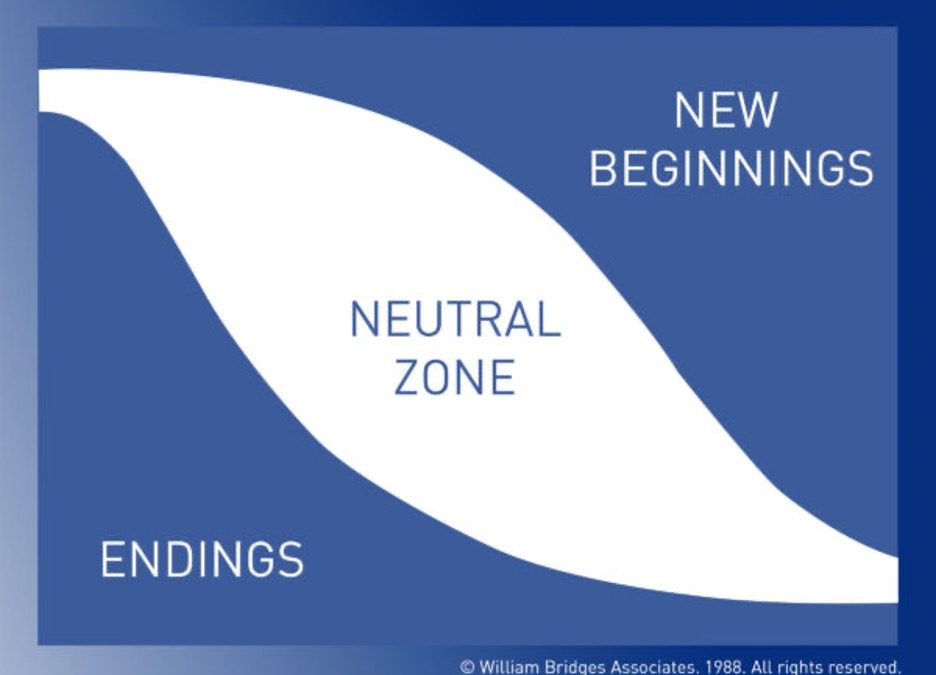
In organizational systems, folks often talk about the difference between change and transition. Change is the external event: a new budget, a restructured staff, or a shift in policy. Transition, however, is the internal, messy, psychological journey we take to catch up to that change.
To help us navigate this, I find myself returning to the William Bridges Transition Model. It reminds us that we don’t just “switch” to the new; we walk through it in three sacred stages.
1. Honoring the Ending
It feels counterintuitive, but every new beginning starts with a loss. Before we can fully inhabit our new vision, we have to acknowledge what we are leaving behind. For some of us, that’s a long-held tradition; for others, it’s a familiar role or way of relating to others.
I think of the Israelites in the book of Exodus. Even as they moved toward the Promised Land, they looked back and mourned the “fleshpots” of Egypt. It wasn’t that they wanted to be back in bondage; it was that the past was known. Giving ourselves permission to grieve the “old way” isn’t a rejection of our future. It is a necessary, honest way of honoring our history.
2. Living in the “Holy Wilderness”
Right now, many of us are in what Bridges calls the Neutral Zone. I prefer to call it our Holy Wilderness. It’s that uncomfortable space where the old ways have faded, but the new rhythms haven’t quite taken root. It can feel chaotic or unsettling.
But the wilderness is exactly where God does God’s best work. Isaiah 43 tells us, “I will make a way in the wilderness and rivers in the desert.” In this “in-between” time, we are invited to lean into one another. We learn that our sufficiency doesn’t come from our structures, but from God’s presence. This is the space where we practice collaboration and learn what it truly means to belong to one another.
3. New Beginnings
Finally, we arrive at the New Beginning. This isn’t just a “start date”. It’s the moment we begin to feel a new energy and see the fruits of our labor. It’s when “mattering” stops being a word in a strategic plan and starts being the felt reality of our shared life.
Please know that Bishop Austin and the diocesan staff are holding these stages with you. Some of us are still in the quiet grief of the Ending, while others are already feeling the spark of the New. Our commitment to you is that we will build Faithful Systems, structures that don’t just move us forward, but hold us tenderly as we go
God is doing a new thing among us in the Diocese of California! My prayer is that we have the patience to walk this wilderness together.
Apr 23, 2026 | #Stories
[CAMP MEEKER, SONOMA COUNTY, CA] — St. Dorothy’s Rest is thrilled to announce the return of Woods to Waves, its beloved annual hikeathon that brings together friends, families, faith communities, and outdoor enthusiasts for a 12.5mile journey from the redwood forest to the Pacific Ocean — all to support children with organ transplants.
Each year, participants gather at St. Dorothy’s Rest in the hills of western Sonoma County and walk together to Shell Beach, celebrating community, resilience, and the healing power of nature. The event raises critical funds for Hospital Transplant Camp, one of St. Dorothy’s flagship programs, which provides a medically supported summer camp experience for children ages 8–18 who have undergone organ transplants.
A Cause That Changes Lives
For children who spend so much of their young lives in hospitals, clinics, and recovery, a week at camp is more than a vacation — it is a chance to reclaim childhood. Hospital Camp allows transplant recipients to hike, swim, create, explore, and laugh with peers who understand their journey. With the support of a nursing team from Lucile Packard Children’s Hospital Stanford, campers can safely enjoy a “normal” summer camp experience at no cost to their families.
“Woods to Waves makes this possible,” said St. Dorothy’s Rest leadership. “Every mile walked helps ensure that some of the most medically vulnerable children in our region can experience joy, independence, and belonging.”
A Joyful Community Event
Woods to Waves is not just a fundraiser — it’s a celebration. Participants walk through towering redwoods, along rolling coastal hills, and down to the ocean, surrounded by a community that believes in compassion, generosity, and the transformative power of camp. Many bring their dogs, their families, or a team of friends. Others walk in honor of a loved one or simply because they believe in giving kids the chance to be kids.
The event is open to all ages and abilities. Participants can register as individuals or form teams, and supporters can sponsor hikers even if they cannot attend in person.
Why Join Woods to Waves?
• It’s meaningful. Every dollar raised directly supports transplant campers and ensures summer camp remains free for families already burdened by medical costs.
• It’s beautiful. The route from St. Dorothy’s Rest to Shell Beach is one of the most stunning hikes in Sonoma County.
• It’s joyful. Participants describe the day as uplifting, energizing, and deeply connected.
• It’s community. Walkers join a long tradition of people who believe in healing, hospitality, and hope.
Event Details
Date: May 2, 2026
Start Location: St. Dorothy’s Rest, Camp Meeker, CA
Finish: Shell Beach, Sonoma Coast
Distance: 12.5 miles
Registration & Donations: https://givebutter.com/2026-woods-to-waves/TransplantCamp
About St. Dorothy’s Rest
Founded in 1901, St. Dorothy’s Rest is the oldest continuously operating camp and retreat center in California and a ministry of the Episcopal Church in California. Its mission is to offer healing, rest, and belonging through summer camps, retreats, and medically supported programs for children facing significant health challenges.
Media Contact
St. Dorothy’s Rest
Patty Olson Lindsey
[email protected]
707-874-3319
Apr 10, 2026 | #Stories
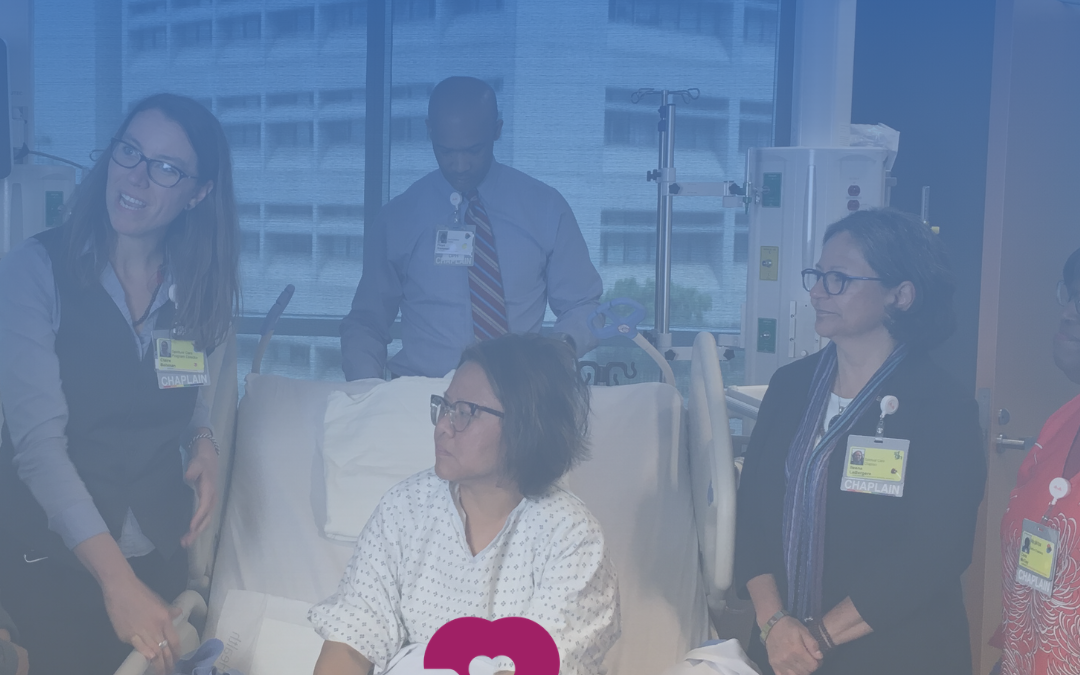
Sojourn Chaplaincy at ZSFG is excited to announce the return of our Community Chaplaincy Training Program. Born in 1982 as a courageous DioCal-driven interfaith response to the AIDS crisis, the program continues to be shaped by the complex challenges of public health today. We are grounded in trauma-informed, justice-centered, and multi-faith spiritual and emotional care.
Our training is for those who feel called to care amid the painful realities of life and death. It is for people who feel called to care in community, among the most vulnerable and targeted, and within systems that are stretched and imperfect. Our students come from many paths and are united by a shared commitment to dignity, relationship, and compassionate presence.
If you feel the pull to deepen your practice of care in these times of great challenge, this program may be for you. Please visit our website for more details and to download an application. Applications for our justice-centered community chaplaincy training program are open today and will be accepted until Sunday, April 26, at 11:59 pm.
You can read more and download the application here.
Sojourn’s work is only possible through the support of our community circle of care. Be a part of this community and help form the next generation of spiritual caregivers with a gift to Sojourn today.

Apr 10, 2026 | #Stories
Story and photo by Laura Curlin
On March 21, a dedicated group of Episcopal lay and clergy leaders took a significant step forward, hosting our first two foundational events at Santisima Trinidad and Holy Child St. Martin’s.
We were honored to welcome Father Francisco Garcia from the Diocese of Los Angeles. As one of the movement’s founders, Fr. Francisco shared the history and vital work of Sacred Resistance in Southern California. This initiative —originally sparked by discussions with Sean McConnell —is a direct response to the urgent need for a faithful, robust challenge to undemocratic and un-Christian immigration policies.
Why Sacred Resistance?
We are drawn to this model because of its proven success in Los Angeles. Their unique approach to organizing and mutual aid operates effectively within Diocesan structures while remaining independently governed. This balance allows the movement to be nimble and responsive in these precarious times.
Looking Ahead
Our goal is to build a statewide network in partnership with Episcopal Dioceses across California. We recognize that introducing a new framework naturally raises questions about alignment. Our vision is for this independent model to complement our collective mission, allowing us to live out our Baptismal vows without duplicating existing efforts. With strong community representation at our initial gatherings, we are energized for the next phase.
Get Involved:
We invite you to join us for our upcoming informational and planning meeting, April 20 at 7 p.m., to connect and shape future events. Email [email protected] for Zoom information. For more background on the movement, please visit the Sacred Resistance website.
Apr 10, 2026 | #Stories
Christ Church, Los Altos, invites the public to explore a moving chapter of the Chinese American experience in California through “Echoes of Eureka,” a program of opera and film.
Eric Tuan’s opera “Echoes of Eureka” tells the true story of the 1885 expulsion of the Chinese community from the Humboldt County town of Eureka and their subsequent fight for justice and dignity.
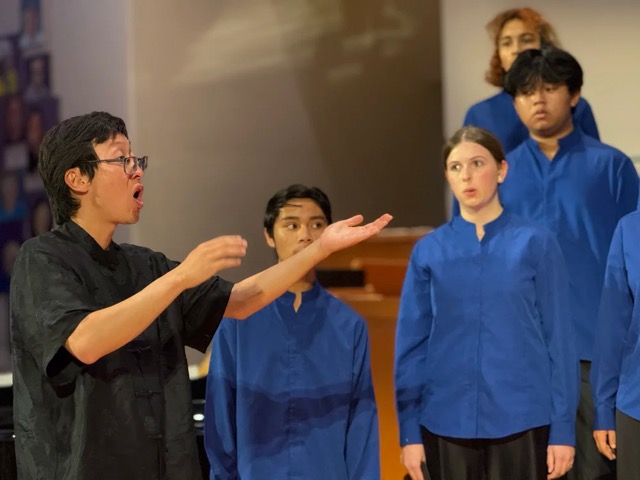
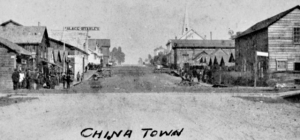 Performed by the 40 voices of the Piedmont East Bay Children’s Choir, the choral work is paired with Chisato Hughes’ documentary film “Many Moons,” in which Chinese community members search for those who may have survived the expulsion and 60 years of enforced exclusion. The only known survivor was Charlie Moon, whose descendants are Native tribal members.
The multimedia program is offered in collaboration with the Chinese Historical and Cultural Project and the Piedmont East Bay Children’s Choir. A panel discussion with Tuan and Hughes will follow the performance.
The church is using funding from its Vital + Thriving focus grant to support the free event.
“We see this program as an extension of the work our Vital + Thriving team did last year supporting a local young immigration activist,” said the Rev. Claire Dietrich Ranna, rector. “With the detention and forced removal of immigrants ongoing and intensifying across the country, there was interest in continuing and deepening our public conversations about not only what is happening now but how hidden histories inform our current moment.”
Tuan is artistic director and conductor of the Piedmont East Bay Children’s Choir and director of the Stanford Early Music Singers. He also served for 12 years as founding artistic director of the chamber chorus Convivium and as director of music at Christ Church, Los Altos. His choral compositions have been performed throughout the United States and Europe.
Hughes is a filmmaker who grew up in Humboldt County. Her work has been shown at CAAMFest, SFMOMA and UCLA’s Film and Television Archive.
“Echoes of Eureka” will be offered free of charge at 4:00 p.m. Sunday, April 19 at Christ Church, Los Altos, 1040 Border Road, Los Altos.
Register for the event >>
Photo credits:
- Courtesy of Clarke Historical Museum
- Courtesy of Piedmont East Bay Children’s Choir


